
About This Template
Xfinity is Comcast’s consumer-facing telecommunications and connectivity brand in the United States. It offers home internet and Wi-Fi, cable TV and streaming services, Xfinity Voice, home services, and Xfinity Mobile.
Unlike a purely mobile carrier, Xfinity operates as a bundle provider with a broadband and cable foundation. Its billing layouts may therefore include a fixed service address, internet plan charges, TV packages, equipment costs, promotional discounts, mobile lines, and device payments.
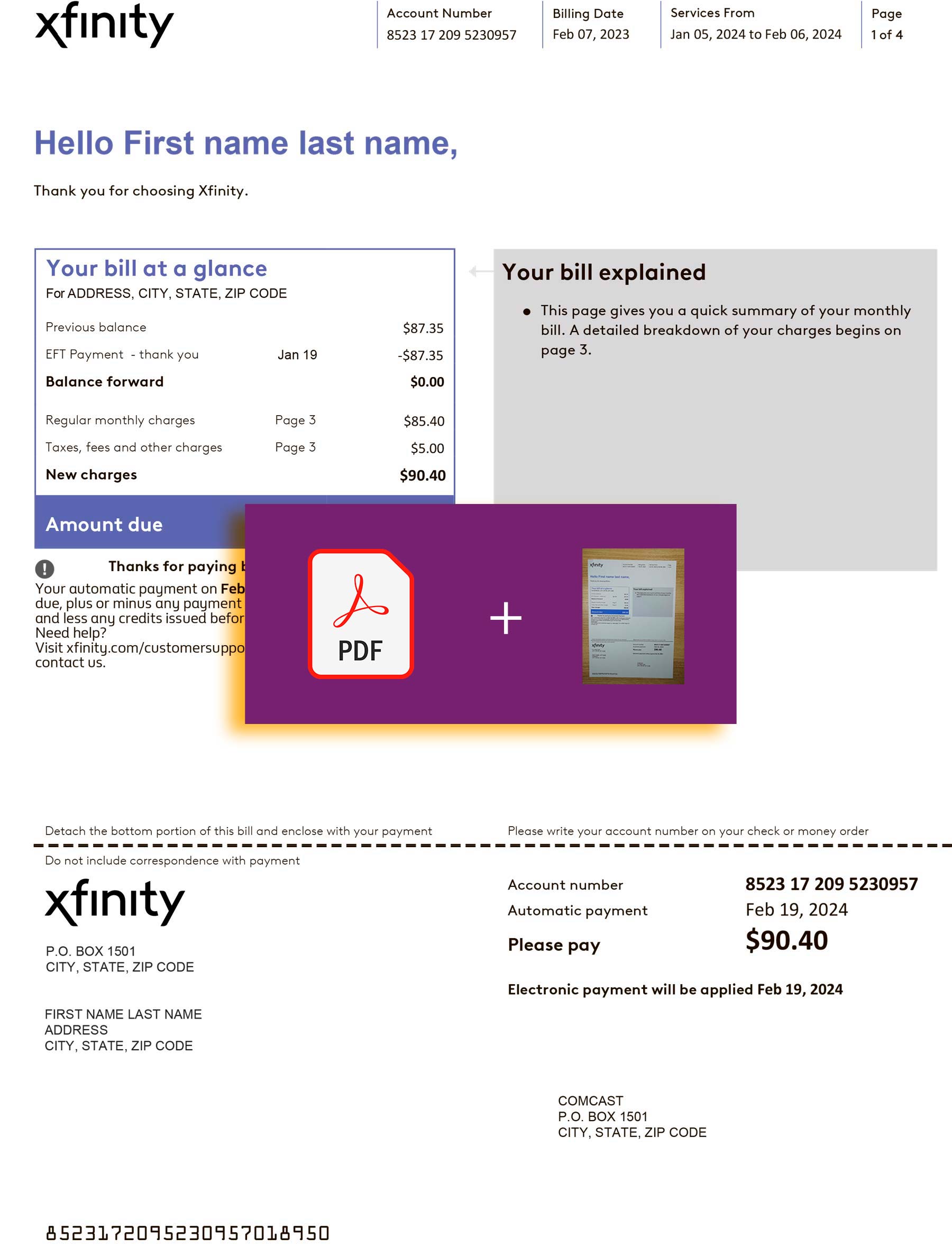
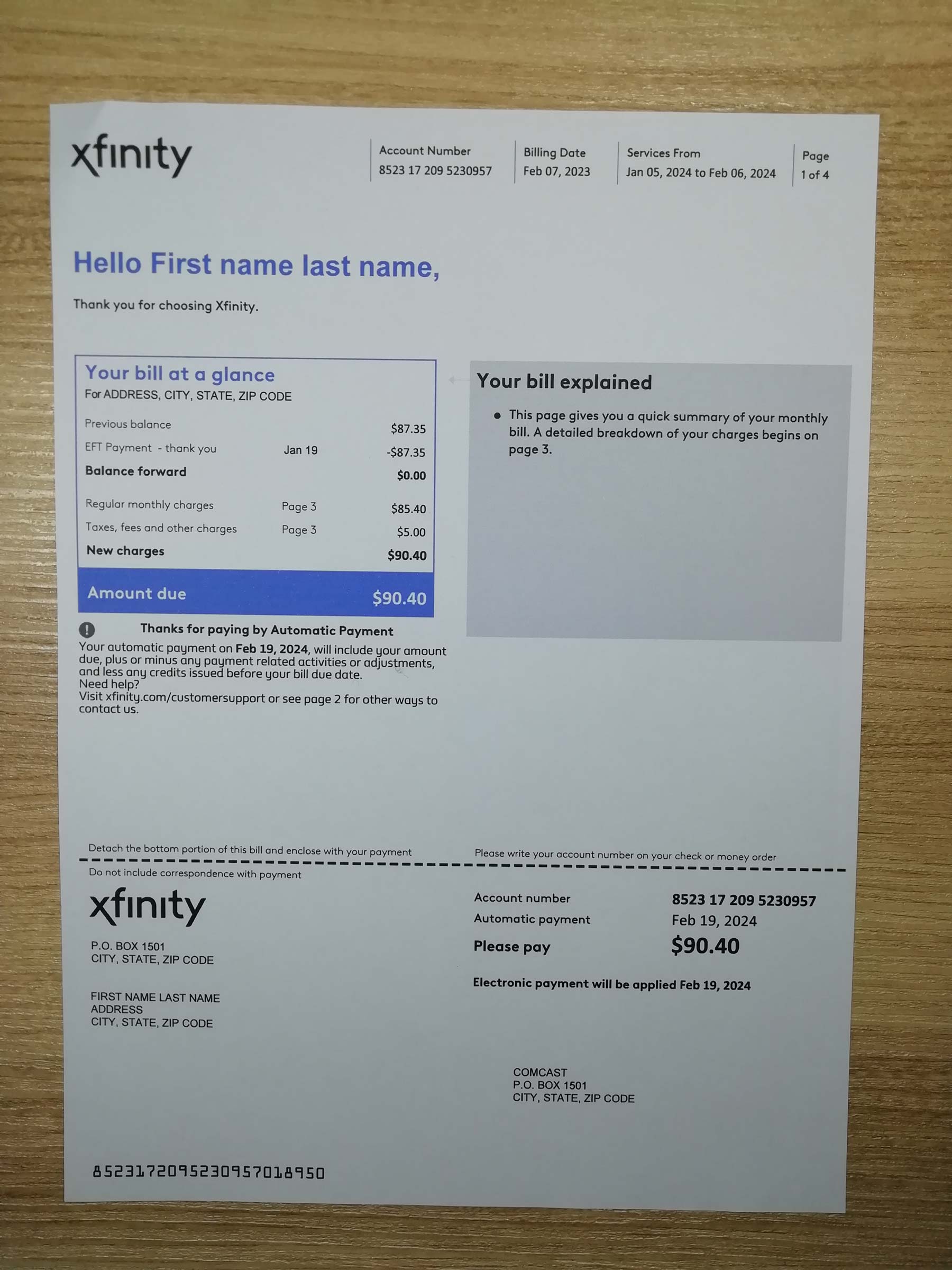
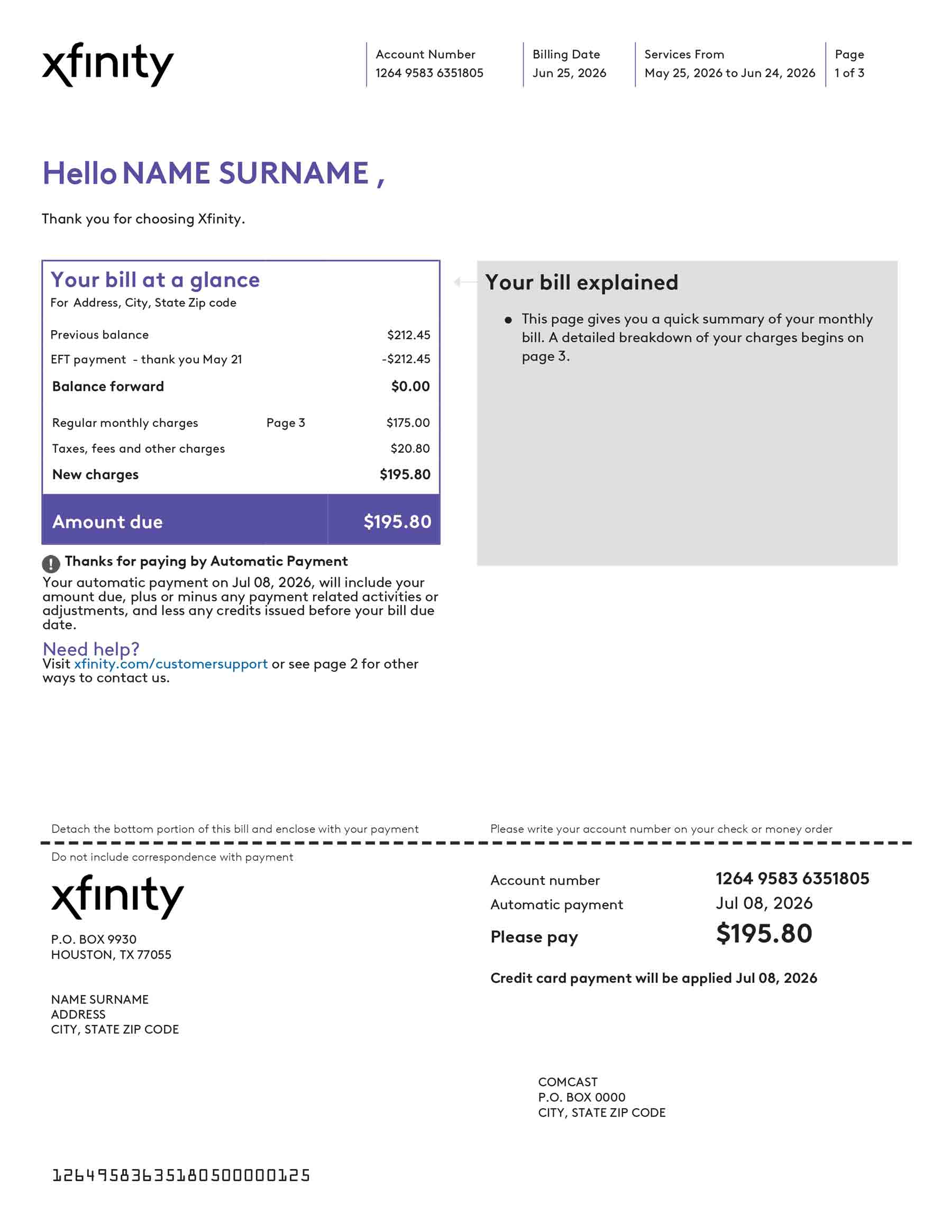
This blank Xfinity bill template models the common information architecture of a telecom billing statement, including:
- Customer and account information
- Statement and billing-cycle dates
- Service plan sections
- Equipment and device charges
- Payment summaries
- Taxes, telecom fees, and adjustments
The editable layout helps designers study complex billing hierarchies without using an actual customer statement or personal account information.

What This Template Is For
Billing-screen mockups
Use the template to design a billing or account-management screen for a telecom, subscription, fintech, or customer-service application.
Billing-page QA testing
Test how websites and applications display long account numbers, multiple services, discounts, plan charges, equipment rentals, fees, and payment history.
Telecom UI/UX portfolios
Present a structured Xfinity-style billing interface as part of a telecom dashboard, account portal, subscription-management project, or UX case study.
Educational demonstrations
Explain how broadband, cable, mobile, and bundled-service statements organize customer information, recurring charges, usage details, adjustments, and payments.
How Telecom Bills Differ From Utility Bills
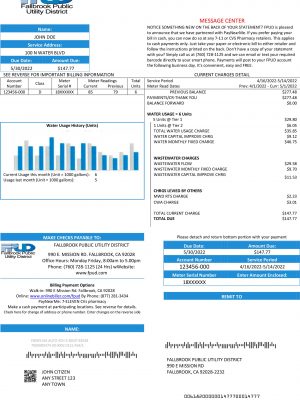
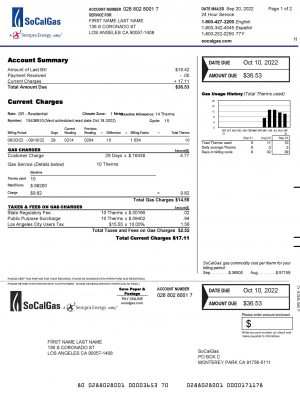
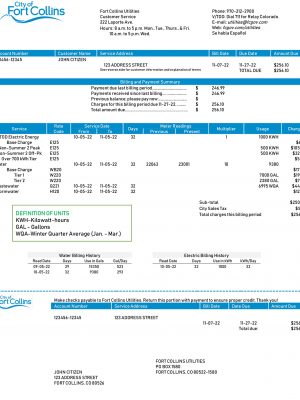
Traditional utility bills are commonly based on measured consumption. An electricity statement may calculate charges from kilowatt-hours, while a water statement may use gallons or cubic meters recorded by a meter.
Telecom bills are primarily subscription-based. Their totals are usually built from recurring service plans, optional features, equipment, devices, promotions, and service-specific fees rather than a single metered resource.
An Xfinity or Comcast billing layout may contain:
- Monthly broadband plan charges
- Cable TV or streaming packages
- Modem, gateway, TV box, or other equipment costs
- Voice-service charges
- Mobile plan charges for individual lines
- Smartphone or device installment payments
- Data or service-usage summaries
- Promotional credits and bundle discounts
- Telecom taxes, regulatory charges, and service fees
This creates a more layered statement than a typical electricity, gas, or water bill. The design must clearly separate recurring subscriptions, one-time charges, equipment, mobile lines, discounts, and taxes.
If You Need a Real Xfinity Bill
A genuine billing statement must come directly from your own active Xfinity account.
Sign in to the official Xfinity Billing account or open the Xfinity app. From there, eligible account holders can view billing details, payment history, current statements, and available PDF copies.
Only an official statement connected to your own account can accurately confirm your services, charges, payments, billing period, and service address.
Why You Shouldn’t Buy a Completed Bill Online
Submitting a purchased, completed, or altered billing statement as though it came from your own service account is deliberate misrepresentation and may constitute fraud.
A third-party document cannot establish that you are an Xfinity customer, that the listed address belongs to you, or that the services and payments actually exist. Using such material for verification can result in rejection, account restrictions, financial losses, or legal consequences.
When an organization requests supporting documentation, use a statement downloaded from your own provider account or ask the organization which alternative documents it accepts.
Xfinity Bill Structure
Because Xfinity is a broadband and cable provider that also offers mobile and bundled services, its statement structure may be more detailed than a mobile-only bill.
1. Account and customer details
The header may contain the customer name, account number, billing address, fixed service address, and masked contact information.
2. Statement period and due date
This area shows the statement date, billing-cycle dates, payment deadline, previous balance, received payments, adjustments, and current amount due.
3. Internet, TV, and Voice charges
Home-service sections may list the internet package, cable or streaming plan, Voice service, premium channels, optional features, and bundle pricing.
4. Equipment and installation items
Charges may include a Wi-Fi gateway, modem, TV equipment, additional boxes, installation services, replacements, or other hardware-related items.
5. Mobile lines and device payments
When the design represents Xfinity Mobile, it may include phone numbers, individual line charges, plan information, data summaries, device installments, credits, and optional mobile features.
6. Taxes, fees, discounts, and adjustments
The final section may separate applicable taxes, telecom charges, regulatory fees, promotional discounts, account credits, one-time charges, and balance adjustments.
Download the Template
Download the blank Xfinity bill design template for interface design, software testing, presentations, and educational demonstrations.
Available formats:
- Editable Word document
- Printable PDF layout
- Blank fields without customer information
- Organized billing sections
- Suitable for desktop and mobile UI references
- Instant digital download
Download disclaimer: This blank design resource is not an official Xfinity statement and cannot verify an account, identity, residence, service address, or payment history.
[Download Editable Word Template]
Frequently Asked Questions
Can I use this template as a real Xfinity bill?
No. It is a blank design template rather than a statement generated by Xfinity. It is not connected to an active customer account and cannot confirm services, payments, account ownership, or an address.
Use it only for billing-interface design, QA testing, portfolio projects, demonstrations, and education.
Why can’t I fill it in and use it as an official bill?
Entering personal information does not turn a design template into a provider-issued statement.
Presenting a self-completed or third-party document as an official bill is misrepresentation and may constitute fraud. An official statement must be generated by Xfinity for the account holder through its authorized billing system.
How do I get a real Xfinity or Comcast bill?
Sign in to your official Xfinity Billing account or open the Xfinity app.
Depending on the account and available services, you can review your current balance, statement history, payment activity, service details, and downloadable billing statements.
Can I use an Xfinity phone bill as proof of address?
A mobile phone bill is usually not accepted as proof of address because mobile service is not necessarily tied to the customer’s physical residence.
An Xfinity broadband, cable, or home-service statement may have a better chance of being accepted because it can display a fixed service address. However, acceptance depends entirely on the requesting institution, country, document date, and verification policy.
Does this template include both home and mobile billing sections?
Yes. The layout can be adapted for broadband, cable TV, Voice, mobile, or bundled-service interface concepts. Designers can remove sections that are not relevant to their project.
Is this template affiliated with Comcast or Xfinity?
No. It is an independently created blank design resource for UI/UX, QA, and educational purposes. It is not issued, sponsored, endorsed, or approved by Comcast or Xfinity.
Reviews
There are no reviews yet.